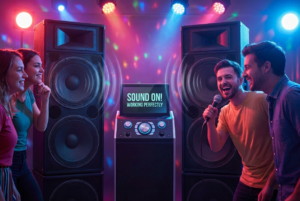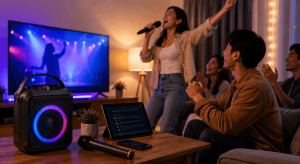
A karaoke dance party combines two activities that already work well at celebrations. Guests can take turns performing favorite songs, while everyone else dances and sings along. With the right setup, you can keep the energy high without making the event feel complicated.
The secret is creating a natural flow between singing and dancing. Long pauses between karaoke tracks can quickly drain the room’s energy. However, continuous music and a flexible playlist can keep people engaged throughout the night.
You also do not need a nightclub-sized room or professional sound system. A television, microphones, suitable speakers, and a safe open area can provide everything you need. Add simple lighting and a prepared playlist, and your home can become a lively entertainment space.
Plan Separate Singing and Dancing Zones
Start by deciding where guests will perform. The karaoke area should face the television or lyric screen so singers can read comfortably. Meanwhile, leave enough space around them for movement without putting equipment at risk.
Create a dance area beside or slightly behind the main performance space. You do not need a huge floor because guests will naturally adjust to the available room. Still, remove coffee tables, loose rugs, bags, and other objects that could cause trips.
A well-planned karaoke dance party should allow guests to move between both zones easily. Keep speakers away from busy walkways and place cables against walls whenever possible. Therefore, singers can perform while other guests dance without stepping over equipment.
Think about seating as well. Not everyone will want to stand throughout the event. Chairs or a sofa along the edge of the room provide comfortable places to watch performances.
Finally, check the room from the singer’s position. Make sure the lyric screen remains visible when people start dancing. A slightly elevated or centrally positioned television can help prevent blocked views.
Build a Playlist That Keeps Energy Moving
Your playlist has a major influence on the party’s pace. Include familiar songs with strong choruses, danceable rhythms, and enough variety for different guests. Popular singalongs often work particularly well because the audience can participate.
Mix high-energy songs with a few slower tracks. Continuous fast music can become tiring after an hour or two. In contrast, occasional slower songs give everyone a chance to rest without stopping the entertainment.
For a karaoke dance party, organize several songs into loose energy groups. You might start with familiar mid-tempo tracks, build toward dance hits, and then introduce a slower section. Afterward, increase the energy again with recognizable party songs.
Prepare more music than you expect to use. Guests may skip certain songs or request tracks you did not anticipate. A larger playlist gives you flexibility without forcing everyone to wait during long searches.
Keep several instrumental or regular music tracks ready between karaoke performances. These can fill short gaps while the next singer chooses a song. As a result, the room never falls completely silent.
Choose Karaoke Songs People Can Dance To
Not every great karaoke song works equally well on a dance floor. Long ballads and complicated vocal showcases can be enjoyable, but they may encourage everyone else to sit down. Therefore, balance those performances with songs that have strong beats.
Look for tracks with memorable choruses and predictable rhythms. Disco, dance-pop, funk, upbeat rock, and many throwback hits can work well. Familiar songs also encourage guests to join the chorus even when they are not holding a microphone.
Consider the age range and musical tastes of your guests. A karaoke dance party becomes more inclusive when the playlist spans several decades and styles. Mixing newer hits with older favorites prevents the evening from feeling designed for only one group.
Duets can also work particularly well. Two singers create more movement on the performance side, while familiar choruses encourage the audience to dance. Group numbers can take this idea even further.
Avoid filling the playlist only with songs you personally enjoy. Ask guests for a few requests before the event when practical. Their suggestions can help you build a playlist that generates stronger participation.
Set Up Sound for Both Singing and Dancing
Clear sound matters because karaoke vocals and dance music have different needs. The backing track should feel energetic, but singers must remain easy to hear. If music overwhelms the microphone, guests may start shouting instead of singing naturally.
Begin with the main speaker at a moderate level. Next, raise the microphone volume until the singer sits clearly above the backing track. Finally, add a small amount of echo or reverb if your system provides those effects.
During a karaoke dance party, resist the temptation to keep increasing the volume. As guests become excited, the room naturally feels louder. Excessive speaker levels can make conversations difficult and increase listening fatigue.
Speaker placement can improve coverage without additional volume. Position the main speakers so they project toward the audience but not directly into microphones. This arrangement also reduces the risk of feedback.
Test the system with actual singing before guests arrive. Speaking quietly into a microphone does not reproduce party conditions. Sing part of an energetic song while moving around the performance area to find possible feedback spots.
Use Lighting to Connect Both Activities
Lighting helps turn separate singing and dancing areas into one unified party space. You can achieve this effect with LED strips, color-changing bulbs, or a compact rotating light. Expensive professional fixtures are not necessary for most homes.
Keep steady illumination around the singer’s face. This makes performances easier to watch and improves casual photos or videos. Meanwhile, colored lights can provide more movement around the dance area.
Your karaoke dance party can use different lighting moods throughout the evening. Brighter colors and moving effects work well during dance-heavy songs. Softer static colors can support ballads or quieter performances.
Avoid making the room completely dark. Guests need enough light to find seats, drinks, and equipment safely. Pathways should remain visible even when the main entertainment area uses colorful effects.
Also, be careful with rapid flashing. Some guests may find intense strobe effects uncomfortable. Slower color changes and moving patterns can still create plenty of energy without overwhelming the room.
Create Smooth Transitions Between Songs
Silence is one of the easiest ways to lose momentum. If every singer spends several minutes searching for a track, other guests may stop dancing and begin separate conversations. Therefore, organize song choices before each performance ends.
Use a simple queue for singers. Guests can add their names and song choices to a written list or digital note. The next performer can prepare while the current person finishes.
A karaoke dance party benefits from having background music ready during transitions. Play a short dance track while changing singers or adjusting microphones. Keep the volume moderate so the next participant can prepare comfortably.
Avoid making every transition feel like a formal announcement. A casual host can introduce the next singer quickly and keep the music flowing. This creates a more relaxed atmosphere.
If nobody wants to sing for a while, switch naturally into a dance section. Karaoke does not need to continue nonstop. After several songs, guests may enjoy fifteen minutes of uninterrupted dancing before returning to the microphones.
Add Games That Combine Singing and Dancing
Party games can connect both activities while giving the event more variety. One easy option is a singer-switch challenge. Start a familiar song, then change performers whenever the host gives a signal.
Another idea combines karaoke with freeze dancing. Everyone dances while one person sings. At selected moments, pause the music and have dancers freeze until the track resumes.
You can also turn your karaoke dance party into a team activity. Divide guests into groups and assign each team a familiar song. One member can sing while the others create simple dance moves for the chorus.
A decade challenge offers another easy game. Participants randomly choose a decade and perform a danceable song from that period. Guests can dress up their movements to match the musical style.
Keep games optional and lighthearted. Some people enjoy structured challenges, while others prefer casual singing. The goal is to add variety rather than force every guest into a competition.
Encourage Shy Guests Without Adding Pressure
Not everyone enjoys performing alone. Some guests may love dancing but avoid microphones, while others may happily sing from their seats. A successful party gives everyone several ways to participate.
Start with group songs rather than immediate solos. Familiar choruses help nervous guests become comfortable with the atmosphere. Once people have sung together, individual volunteers often appear naturally.
Duets are especially useful during a karaoke dance party because friends can share the attention. A confident singer can invite someone less comfortable to join. However, always allow guests to decline without making it a big moment.
Dancing provides another form of participation. Someone who never sings can still support performers through movement, applause, or group choruses. These contributions help the room feel energetic.
Hosts can set the tone by performing early. Choose something fun rather than technically demanding. Showing that mistakes are acceptable makes karaoke feel much more welcoming.
Plan Short Breaks Without Killing the Mood
Singing and dancing both require energy, so guests will eventually need breaks. Instead of stopping everything suddenly, plan natural lower-energy periods. Slower music can give people time to sit, drink water, and talk.
Keep water easily available throughout the event. Singing can make people thirsty, especially after energetic performances. Moreover, dancers will appreciate convenient access to drinks without leaving the main party area for long.
During a karaoke dance party, use snack breaks strategically. After a high-energy set, reduce the volume and play background music while guests eat. Then restart with a recognizable group song.
Avoid serving food directly beside microphones or audio equipment. Spills can damage electronics and create slippery floors. A separate snack table keeps the entertainment area safer.
Watch the group’s energy rather than following a rigid schedule. If everyone remains excited, there is no reason to force a break. Likewise, slowing down for ten minutes can help the party regain momentum later.
Keep the Dance Floor and Karaoke Area Safe
Movement creates more safety concerns than seated karaoke. Clear the floor before guests arrive and remove furniture that reduces useful space. Loose rugs and exposed cables deserve particular attention.
Wireless microphones can reduce cable clutter around singers. If you use wired models, route the cables away from the dance area. Never allow long cords to stretch across busy pathways.
Lighting equipment should also remain secure. Place small fixtures where guests cannot easily kick or knock them over. In addition, keep drinks away from speakers, power strips, mixers, and chargers.
A crowded karaoke dance party may need a smaller performance area than expected. Do not keep adding people to the dance floor when movement becomes uncomfortable. Encourage guests to rotate between dancing, singing, and sitting.
Keep the sound at comfortable levels throughout the evening. Louder music does not automatically create more excitement. Clear audio and enthusiastic guests usually produce a better atmosphere than extreme volume.
Give the Party a Memorable Finale
The final section should bring singers and dancers together. Instead of ending after an unfamiliar solo, save a widely recognized song for the last performance. Choose something with an easy chorus and strong energy.
Invite everyone to join rather than selecting one final singer. Some guests can share microphones while others dance and sing from the audience. This creates a natural sense of conclusion.
For your karaoke dance party finale, increase the lighting energy slightly without making it overwhelming. Color changes or gentle moving effects can make the final song feel special. Keep enough steady light for everyone to move safely.
You can prepare two possible finale songs in case the group’s mood changes. One might be an energetic dance anthem, while another could be a nostalgic singalong. Let the room’s energy guide the final choice.
Afterward, lower the music gradually instead of stopping everything immediately. A softer playlist gives guests time to talk and settle down. It also makes the transition from party mode feel less abrupt.
Conclusion
Combining karaoke with dancing can create a more interactive event than either activity alone. The key is designing a room where performers, dancers, and seated guests can all participate comfortably. Good playlists and smooth transitions keep the entertainment moving.
A successful karaoke dance party does not require expensive equipment or a huge space. Clear sound, visible lyrics, simple lighting, and a safe dance area provide a strong foundation. Group songs, duets, and games can then add variety throughout the night.
Prepare your equipment and playlists before guests arrive, but keep the schedule flexible. Follow the room’s energy and switch between singing, dancing, and short breaks when needed. When everyone has several ways to join the fun, the party becomes easier to enjoy and harder to forget.
FAQ
1. How much space do I need for singing and dancing?
A large room is not essential for a successful event. Clear enough floor space for several people to move comfortably and keep furniture around the edges. Most importantly, keep cables and equipment away from active areas.
2. What songs work best for a combined singing and dance party?
Choose familiar songs with strong rhythms and easy choruses. Dance-pop, disco, upbeat rock, and throwback hits often work well. Mix energetic tracks with slower songs so guests can rest.
3. How do I prevent awkward pauses between singers?
Create a song queue and ask the next performer to prepare early. Background music can play during short transitions. You can also switch into a dance section whenever nobody wants the microphone.
4. Do I need separate speakers for karaoke and dancing?
Not necessarily. A capable karaoke or powered speaker can often handle both activities in a modest room. Focus on clear vocals, balanced music, suitable output, and proper speaker placement.
5. How can shy guests participate without singing alone?
Offer duets, group choruses, dancing, and simple team games. Avoid forcing anyone to perform a solo. A relaxed environment usually encourages more participation as the evening continues.