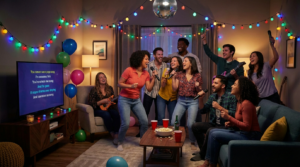
Great karaoke depends on more than microphones, speakers, and a long playlist. The atmosphere also shapes how comfortable people feel when they step up to sing. With thoughtful karaoke party lighting, even an ordinary living room can feel like a small performance venue.
Fortunately, you do not need professional stage equipment to create that effect. A few carefully positioned lights can define the singing area and energize the room. Moreover, simple lighting choices can help guests focus on the performer without making your space uncomfortable.
The key is to use lighting with purpose instead of filling every corner with flashing effects. Color, brightness, placement, and movement should work together. When you balance those elements, your karaoke setup becomes more immersive while remaining comfortable for singers and guests.
Start With the Room Before Adding Lights
Before buying or positioning lights, examine the room where you plan to host karaoke. Look for existing lamps, windows, reflective surfaces, televisions, and areas where guests will sit. This quick assessment helps you decide which parts of the room need more light.
Next, identify the main singing area. It does not need to be a raised stage or permanent entertainment space. Instead, choose an open section with enough room for a singer, microphone stand, and perhaps two people performing a duet.
Your karaoke party lighting should make this area visually different from the audience space. For example, you can keep seating areas softly illuminated while making the performance zone brighter. As a result, everyone naturally knows where to look when a song begins.
Avoid turning off every normal light in the room. Complete darkness can make it difficult for guests to walk safely, find drinks, or use equipment. Instead, reduce general lighting while keeping pathways and important areas visible.
Also, consider the surfaces around your performance area. Light-colored walls reflect colored LEDs more effectively than very dark walls. Mirrors and glossy surfaces can also intensify moving effects, so use them carefully to avoid distracting reflections.
Use LED Lights to Build the Main Atmosphere
LED lighting is one of the easiest ways to transform a karaoke space. LED strips, light bars, bulbs, and compact fixtures are widely available. In addition, many models offer adjustable brightness and several color options.
Place LED strips behind a television, karaoke screen, table, or entertainment unit. Indirect light creates a soft glow without shining directly into anyone’s eyes. Therefore, it can make the room feel more polished without requiring complicated installation.
Color-changing bulbs are another practical option for karaoke party lighting. You can place them in existing lamps and choose colors that suit the mood. For example, warmer colors can complement slower songs, while blues and purples can create a relaxed lounge atmosphere.
Try not to display every available color at the same time. Too many competing shades can make the room look cluttered rather than exciting. Instead, choose two or three complementary colors and let them establish the visual theme.
Brightness also matters. Start at a moderate level, then adjust the lights after testing the room with your main lighting turned down. This approach creates atmosphere while keeping lyrics, controls, cables, and other important items easy to see.
Add a Spotlight to Define the Performance Area
A spotlight immediately tells guests where the performance happens. Fortunately, a home karaoke spotlight does not need to resemble professional theater equipment. A compact LED fixture can provide enough focused light for most living rooms.
Position the light slightly above or in front of the singer when possible. However, avoid pointing a powerful beam directly into the performer’s eyes. Angling it downward can illuminate the singer while reducing uncomfortable glare.
A spotlight also helps balance colorful karaoke party lighting around the room. Moving effects may look exciting, but singers still need enough steady illumination to remain visible. Therefore, combining a stable front light with colorful background effects often produces a better result.
If you record karaoke videos, front lighting becomes even more important. Cameras need enough light to capture faces clearly. A soft white or warm-white light can improve video quality while colored lights remain visible in the background.
You can also experiment with two lights positioned at different angles. This arrangement reduces harsh shadows and gives the singing area more depth. Still, keep the setup simple unless you regularly host larger karaoke events.
Create Movement With Disco and Rotating Effects
Moving lights bring energy to upbeat songs and group performances. Small disco balls, rotating LED fixtures, and sound-reactive lights can create movement across walls and ceilings. Consequently, the room feels more active without requiring a large lighting system.
Sound-activated fixtures are particularly convenient because they react to music automatically. Some respond to bass or overall volume, while others change patterns according to preset programs. Therefore, you can enjoy dynamic effects without controlling the lights during every song.
However, movement should support your karaoke party lighting rather than dominate it. Constant rapid flashing can become tiring during a long evening. It may also make slower performances feel visually mismatched.
Use moving effects selectively instead. Turn them up during dance songs, energetic duets, and group performances. Then reduce the movement during ballads or quieter songs to create contrast throughout the evening.
A small rotating fixture can often cover a surprising amount of space. Before guests arrive, test where the beams land from different positions. Ideally, the patterns should cover walls and ceilings instead of repeatedly shining into people’s faces.
Match Colors to Different Types of Songs
Color can influence how a room feels, even when guests do not consciously notice it. Warm colors often create an energetic or intimate atmosphere. Meanwhile, cooler shades can make a room feel calmer and more modern.
Consider using red, orange, or warm pink tones for lively pop and rock songs. Blue and purple can work well for ballads, slower tracks, and relaxed performances. Green or mixed colors may suit playful songs and group singalongs.
You do not need to change your karaoke party lighting manually for every track. Instead, create a few simple lighting scenes before the party. For example, you might have energetic, relaxed, romantic, and neutral settings ready to use.
Smart bulbs and app-controlled LED fixtures can make these changes easier. Some products allow you to save scenes, adjust brightness, or synchronize compatible lights. However, you should test these controls before the event instead of configuring them while guests wait.
Consistency is more important than perfect color theory. If several fixtures use slightly different shades, the room can appear visually messy. Therefore, coordinating a limited palette usually creates a cleaner and more intentional look.
Try Music-Synchronized Lighting Carefully
Music synchronization can make home karaoke feel surprisingly professional. Compatible lighting systems can react to rhythm, volume, or specific frequencies in the music. As a result, lighting changes can follow the energy of a performance automatically.
For an upbeat track, responsive lights may pulse or change colors with the beat. During slower music, softer transitions can maintain the mood without distracting from the singer. This dynamic response can make performances feel more engaging for the audience.
Still, synchronized karaoke party lighting works best when the effects remain controlled. Extremely fast flashing can overwhelm the room and may cause discomfort for some guests. Consequently, slower transitions and moderate brightness are safer choices for mixed groups.
Consider including a steady-light option throughout the party. Guests who dislike moving effects can still enjoy the event comfortably. Moreover, steady illumination makes it easier to navigate the room between performances.
If your lights use microphones to detect sound, position them near the main speakers but not directly against them. Then test their sensitivity before guests arrive. Proper adjustment helps the lights respond to music rather than every conversation in the room.
Use Background Lighting for Photos and Videos
Karaoke parties often produce memorable photos and videos. Good background lighting can make those recordings look far better without adding complicated camera equipment. Therefore, consider what appears behind the singer when designing the performance area.
LED light bars can wash a blank wall with color. Alternatively, indirect strip lighting can create a clean glow behind curtains, furniture, or a karaoke display. These techniques provide visual depth while keeping the background relatively uncluttered.
Well-planned karaoke party lighting should separate the singer from the background. If both receive exactly the same brightness, videos can look flat. Instead, keep the performer’s face properly illuminated while using stronger colors behind them.
Avoid placing extremely bright fixtures directly behind the singer. A phone camera may expose for the light and leave the person’s face too dark. Moving the fixture to one side or reducing its brightness usually solves this problem.
Before the party, record a short test video from the area where guests are likely to stand. Check faces, background colors, and screen glare. Small adjustments at this stage can significantly improve photos and videos later.
Keep Lighting Comfortable and Safe for Guests
Visual excitement should never come at the expense of comfort. Flashing lights, intense brightness, and fast-moving patterns can bother some people. Therefore, provide enough steady illumination and avoid making rapid strobe effects a central part of your setup.
Cables also deserve careful attention. Keep power cords away from walking areas whenever possible. If a cable must cross the floor, secure it properly so guests do not trip while moving between seats and the singing area.
Heat is less of a concern with modern LEDs, but fixtures still need appropriate ventilation. Follow the manufacturer’s placement instructions and avoid covering lights with fabric. In addition, keep drinks away from electrical connections and power strips.
Effective karaoke party lighting does not require maximum brightness. In fact, lower levels often create a more comfortable atmosphere. A combination of soft ambient light, focused performer illumination, and restrained effects usually works better than filling the room with intense beams.
Finally, consider your guests before activating flashing effects. Some people are sensitive to rapidly changing light. Using gentle fades, static colors, and slower movement makes the party welcoming to a wider range of guests.
Build a Simple Lighting Setup on a Budget
You can create an impressive setup without purchasing expensive professional equipment. Start with equipment you may already own, such as dimmable lamps or smart bulbs. Then add only the effects that make the biggest visual difference.
A basic arrangement might include LED strips behind the karaoke screen and one small front light for the singer. Add a compact rotating or sound-reactive fixture if you want more movement. This combination can transform a small room while remaining easy to operate.
For affordable karaoke party lighting, placement often matters more than quantity. One well-positioned light can have more impact than several fixtures pointing randomly around the room. Therefore, test each light individually before deciding that you need another one.
You can also use walls and ceilings as large reflective surfaces. Pointing an LED light toward a light-colored wall creates a softer wash than aiming it directly at guests. As a result, inexpensive fixtures can cover more visual space.
Build your setup gradually if you host karaoke regularly. After each party, note which effects guests enjoyed and which ones you rarely used. Future purchases can then address real needs instead of adding unnecessary equipment.
Plan Your Lighting Before Guests Arrive
Testing your setup beforehand prevents awkward interruptions during the party. Turn on the karaoke system, dim the room, and stand where singers will perform. Then check whether you can read lyrics and operate the microphone controls comfortably.
Play several types of music during the test. An energetic dance track can reveal whether moving effects feel exciting or excessive. Meanwhile, a slower song helps you determine whether your setup can create a calmer atmosphere.
Prepare your main karaoke party lighting scenes before the first guest arrives. If your fixtures use remote controls, place them somewhere easy to reach. Likewise, charge wireless controllers and smart devices in advance.
Next, test your television or projector for glare. A badly positioned spotlight can reflect from the screen and make lyrics difficult to read. Adjusting the light angle often fixes the problem without reducing overall brightness.
Finally, view the room from both the singer’s position and the audience area. A setup that looks great from the sofa may feel uncomfortable on stage. Testing both perspectives helps you create a balanced environment for everyone.
Conclusion
Lighting can completely change how a home karaoke party feels. You do not need a professional rig or dozens of fixtures to create a memorable atmosphere. Instead, focus on clear performer lighting, comfortable ambient illumination, coordinated colors, and a few carefully selected effects.
Start with LEDs or smart bulbs, then define the performance area with a steady light. Afterward, introduce movement through a rotating or music-reactive fixture if it suits your guests. Most importantly, adjust every effect so it supports the music rather than competing with it.
The best karaoke party lighting makes guests excited to grab the microphone while keeping the room comfortable and safe. Thoughtful placement often matters more than expensive equipment. With a simple plan and a few tests before the event, your living room can feel like a welcoming karaoke stage.
FAQ
1. What lights work best for a home karaoke party?
LED strips, smart bulbs, compact spotlights, and sound-reactive fixtures work well for most homes. Together, they provide ambient color, performer illumination, and optional movement. Start with two or three types rather than filling the room with effects.
2. Where should I place lights around the singer?
Place a soft main light slightly above and in front of the performer. Then use colored fixtures behind or beside the singing area to add depth. Avoid aiming powerful lights directly into the singer’s eyes.
3. Do I need sound-activated lights for karaoke?
No, but they can add energy without requiring constant manual control. Simple static LED colors can still create an attractive atmosphere. If you use sound activation, choose moderate sensitivity and avoid excessive flashing.
4. What colors create the best karaoke atmosphere?
Blue, purple, pink, red, and warm amber tones all work well depending on the song. However, two or three coordinated colors usually look better than a constantly changing rainbow. You can also create different color scenes for different music styles.
5. How can I improve lighting without spending much money?
Start by dimming existing room lights and repositioning lamps you already own. Then add an affordable LED strip or color-changing bulb behind the performance area. Careful placement can create a dramatic improvement without requiring expensive stage equipment.