A kid-friendly karaoke party can turn a birthday, sleepover, or family gathering into an exciting musical event. Children get to sing favorite songs, cheer for friends, and enjoy performing without needing professional skills. However, the best parties focus on participation and fun instead of competition.
You also do not need expensive equipment or an elaborate stage. A simple karaoke machine, television, microphones, and a safe open space can provide everything children need. In addition, a few decorations and activities can make the singing area feel special.
Good planning helps the event run smoothly from the first song to the final performance. Song choices should suit the age group, while equipment should remain easy to operate. Most importantly, every child should feel welcome whether they want to sing loudly or simply watch their friends.
Choose the Right Karaoke Equipment for Children
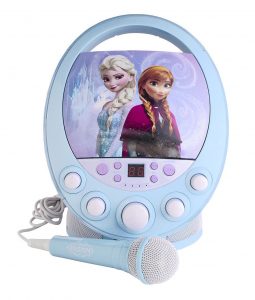
Start with equipment that children can use without complicated controls. A compact karaoke machine with clear buttons can work well for younger singers. Meanwhile, older children may enjoy a system connected to a television for larger lyrics.
Wireless microphones can reduce cable clutter around the performance area. However, choose models that feel comfortable in smaller hands and do not require difficult pairing steps. Two microphones are especially useful because children often feel more confident singing with a friend.
Keep speaker volume moderate throughout your kid-friendly karaoke party. Children may ask for louder music as excitement builds, but comfortable sound levels create a better experience. Furthermore, lower volume makes it easier for adults to communicate and supervise the room.
Place speakers where children cannot easily knock them over. Likewise, keep power strips, chargers, and other electrical connections away from drinks and busy walkways. Secure any necessary cables so nobody trips while rushing toward the microphone.
Finally, test everything before guests arrive. Charge wireless microphones, connect your music source, and play several songs at normal volume. A short test prevents technical problems from interrupting the party later.
Build an Age-Appropriate Song List
Songs can shape the entire mood of a children’s karaoke event. Start by choosing tracks with clear lyrics, familiar melodies, and themes that suit the guests’ ages. Popular animated movie songs, family-friendly pop tracks, and classic singalongs can provide good starting points.
Do not rely only on what is currently popular. A trending song may contain language or themes that are not appropriate for every group. Therefore, review lyrics and video content before adding a track to the playlist.
For a kid-friendly karaoke party, variety helps everyone find something enjoyable. Include upbeat songs, slower choices, duets, and group numbers. Moreover, add a few easy tracks with repetitive choruses for children who have never tried karaoke before.
Keep songs reasonably short when possible. Younger guests may lose interest during long instrumental sections or extended performances. Shorter tracks also give more children a chance to take the microphone.
Prepare more songs than you expect to use. Children often change their minds once they hear friends perform. A larger approved playlist gives them freedom to choose while keeping the content suitable for the event.
Create a Safe and Comfortable Singing Area
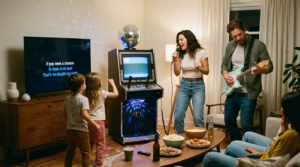
You do not need a real stage to create an exciting performance zone. Clear a section of the living room, playroom, or party venue and make it visually distinct. A small rug, backdrop, or simple decorations can define where children should stand.
Remove furniture with sharp corners from the immediate performance area. In addition, keep bags, toys, loose cables, and other obstacles away from children’s feet. Young singers may dance or move unexpectedly while performing.
Lighting can make your kid-friendly karaoke party feel more festive, but avoid intense flashing effects. Soft LED lights, colorful lamps, or slow-changing light patterns create atmosphere without overwhelming the room. Keep enough general lighting so children can move safely.
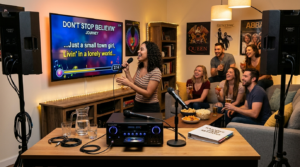
Position the lyric screen where singers can see it easily. Children should not need to twist around or stand close to the television to read the words. If possible, place the screen in front of the main singing position.
Provide seating nearby for children who are waiting for their turn. A comfortable audience area encourages guests to watch and support each other. It also keeps the performance space clearer and easier to supervise.
Make Singing Optional and Encourage Participation
Not every child wants to perform alone, especially at the beginning of a party. Some may feel nervous about singing in front of friends. Therefore, avoid forcing anyone to take a solo turn.
Instead, start with a group song that most guests know. Group performances reduce pressure and help children become comfortable with the microphones. Afterward, confident singers may naturally volunteer for individual songs.
Duets are another useful feature of a kid-friendly karaoke party. Pairing friends or siblings gives shy children someone to share the stage with. Moreover, two singers can make unfamiliar songs feel less intimidating.
Adults can participate too. A parent or host singing a silly opening song shows children that karaoke does not require perfection. This approach often creates a relaxed atmosphere where mistakes become part of the fun.
Celebrate effort instead of vocal ability. Cheer after every performance and avoid comparing singers. When children know they will receive encouragement, they are more likely to participate willingly.
Add Karaoke Games Between Performances
Singing does not need to be the only activity. Simple karaoke games can keep children interested while giving their voices occasional breaks. These activities are especially useful during longer birthday parties.
Try a mystery song challenge where you play a short instrumental section and let children guess the title. Another option is a finish-the-lyric game using songs from your approved playlist. Keep the questions easy enough for the age group.
You can also include musical statues during your kid-friendly karaoke party. Play a lively song and let children dance until the music stops. When it pauses, everyone freezes until the next round begins.
A costume accessory station can add another playful element. Provide safe items such as lightweight hats, colorful glasses, scarves, or simple props. Children can choose an accessory before performing without needing full costumes.
Avoid games that eliminate children for long periods. Activities work better when everyone can continue participating. Cooperative games also reduce arguments and keep the focus on shared entertainment.
Plan Simple Snacks and Drink Breaks
Singing, dancing, and talking can make children thirsty quickly. Keep water easily available throughout the event. In addition, schedule short breaks so everyone has time to rest and have a drink.
Choose snacks that are easy to handle and appropriate for your guests. Small sandwiches, fruit, crackers, and other simple foods can work well. However, always consider allergies and dietary requirements before planning the menu.
Keep food away from microphones and electronic equipment during your kid-friendly karaoke party. Sticky hands and drinks can damage controls, speakers, and other devices. A separate snack table helps establish a clear boundary.
Avoid serving a large meal immediately before energetic singing and dancing. Instead, offer smaller portions at sensible intervals. Children can return to the activities without feeling uncomfortable.
Napkins and cleaning supplies should remain within easy reach. Small spills are common at children’s parties, so quick cleanup helps keep floors safe. Adults can also check the singing area during each break for dropped food or other hazards.
Use Decorations Without Cluttering the Room
A few decorations can make the karaoke area feel like a real event. Balloons, streamers, colorful table coverings, and a simple backdrop can create plenty of visual interest. Therefore, you do not need to fill every surface with themed items.
Choose a color palette that matches the birthday theme or the child’s preferences. Two or three main colors usually create a cleaner appearance than many unrelated shades. Soft LED lighting can then complement those colors around the performance area.
For a kid-friendly karaoke party, avoid hanging decorations where children will sing or dance. Low streamers and loose decorations can become distracting or create tripping hazards. Instead, concentrate decorations behind the stage area and around the snack table.
A photo corner can also provide entertainment between songs. Use a simple background and a few safe props so children can take pictures with friends. Keep this area separate from the active singing space.
Do not place decorations over speakers, lights, vents, or electrical equipment. Even lightweight materials can interfere with ventilation or controls. Simple, well-positioned decorations are safer and usually look better.
Keep the Party Schedule Flexible
A loose schedule helps maintain momentum without making the event feel rigid. You might begin with a group song, move into individual performances, pause for snacks, and then introduce a karaoke game. This structure gives children variety throughout the party.
However, watch how the guests respond instead of following the schedule exactly. If everyone is enjoying duets, there is no reason to stop immediately. Likewise, switch activities when attention begins to fade.
For younger children, a shorter kid-friendly karaoke party may work better than several hours of continuous singing. Their energy and attention can change quickly. Therefore, mix karaoke with food, games, and quieter activities.
Create a simple method for choosing who sings next. You can use a written list, numbered cards, or a host who manages turns. A clear system reduces arguments about the microphones.
Allow extra time near the end for favorite songs. Children often want to repeat the biggest group numbers before going home. Ending with a song everyone can sing creates a natural and memorable finale.
Set Fair Rules for Microphones and Turns
Microphones can quickly become the most wanted objects at a children’s karaoke party. Establish simple rules before singing begins. For example, explain that each person gets a turn and microphones return to the host after each song.
Two microphones can make turn-taking easier. Still, children should understand that holding a microphone does not mean keeping it indefinitely. A host can quietly manage equipment while helping the next singers prepare.
Your kid-friendly karaoke party should also include basic behavior expectations. Guests should listen while others perform, avoid shouting into microphones, and treat the equipment carefully. Keep the rules short so children can remember them.
If disagreements happen, redirect attention toward a group performance or game. Avoid turning microphone access into a major competition. The goal is to keep everyone involved rather than reward whoever reaches the equipment first.
Adults should remain nearby throughout the event. Active supervision helps solve small problems before they interrupt the party. It also ensures children use audio equipment safely.
Protect Children’s Privacy When Taking Photos
Parents often take photos and videos during parties, especially when children perform. However, not every family wants images of their child shared online. Therefore, ask parents or guardians about photo preferences before posting anything publicly.
Keep the focus on private memories rather than social media content. A child should never feel pressured to perform because someone wants a video. Their comfort matters more than capturing a perfect clip.
If you record your kid-friendly karaoke party, avoid showing personal information in the background. School names, addresses, schedules, and other identifying details should remain out of view. A simple neutral backdrop can help.
You can also designate certain moments for photos instead of recording the entire event. This approach lets children enjoy most of the party without constantly being filmed. Moreover, parents can focus on the experience instead of their phones.
Always respect a request not to photograph or record a child. Clear communication before the party makes this easier to manage. Responsible photo practices help keep a fun event comfortable for every family.
Prepare a Backup Plan for Technical Problems
Technology occasionally fails, even when you test it beforehand. Bluetooth connections can drop, microphones can lose power, and internet connections can become unreliable. Therefore, prepare a few simple alternatives.
Download or save suitable music in advance when your service allows it. You can also keep a regular speaker available for dance games if the karaoke system stops working. The party can continue even without lyrics on a screen.
Spare batteries can be useful if your microphones require replaceable cells. For rechargeable equipment, fully charge everything before your kid-friendly karaoke party begins. Keep compatible charging cables nearby but away from the active performance area.
If the microphone stops working, turn the moment into a group singalong. Children often care more about continuing the song than solving the technical problem immediately. An adult can troubleshoot while everyone stays entertained.
Most importantly, do not let equipment problems change the mood. Children usually follow the host’s reaction. Treating a technical issue casually helps keep the event relaxed.
Conclusion
Successful children’s karaoke is less about expensive equipment and more about creating a welcoming environment. Age-appropriate songs, manageable sound levels, simple games, and fair turns help every guest enjoy the experience. Safe equipment placement and active adult supervision are equally important.
A memorable kid-friendly karaoke party should give confident performers room to shine without pressuring quieter children. Group songs and duets make participation easier, while breaks prevent the event from becoming tiring. Simple decorations and lighting can add excitement without cluttering the room.
Plan the essentials before guests arrive, but stay flexible once the music starts. Children may surprise you with the songs and activities they enjoy most. When safety, inclusion, and fun guide your choices, karaoke can become a party activity everyone remembers positively.
FAQ
1. What age is suitable for a children’s karaoke event?
Children can enjoy karaoke at many ages when the equipment and activities suit their abilities. Younger children often prefer simple singalongs and familiar movie songs. Older children may enjoy choosing tracks and performing duets with friends.
2. How loud should karaoke be for children?
Keep the volume comfortable enough for people to speak without shouting. Avoid placing children directly beside loud speakers for extended periods. If the sound feels uncomfortable to adults nearby, reduce it.
3. What songs work best for younger singers?
Choose familiar tracks with simple lyrics, clear melodies, and age-appropriate themes. Animated movie songs and repetitive singalongs often work particularly well. Review both lyrics and videos before the event.
4. How do I encourage a shy child to participate?
Offer group songs or duets instead of asking for a solo performance. Allow the child to watch until they feel comfortable joining. Most importantly, never make singing mandatory or criticize someone for choosing not to perform.
5. How long should a children’s karaoke event last?
The ideal length depends on the children’s ages and the other planned activities. Younger groups usually benefit from shorter singing sessions mixed with games, snacks, and breaks. Watch their energy levels and adjust the schedule when needed.